


Managing glaucoma often means building your day around eye drops. Morning doses, evening doses, and sometimes several different bottles can make it easy to miss a drop, and missed drops can let eye pressure creep back up.
For people with open-angle glaucoma or ocular hypertension, direct selective laser trabeculoplasty (DSLT) offers a way to lower eye pressure with a treatment that takes only seconds, uses no needles, and never touches the eye. Here’s a closer look at how the procedure works and who it can help.
Why Eye Pressure Matters in Glaucoma
Your eye constantly produces a clear fluid called aqueous humor, which fills the front of the eye and keeps its tissues healthy. That fluid drains out through a spongy tissue called the trabecular meshwork, located where the iris meets the cornea, in the drainage angle. In open-angle glaucoma, the drainage system works less efficiently, so fluid builds up and causes eye pressure to rise. Over time, elevated pressure can damage the optic nerve and lead to permanent vision loss. Lowering intraocular pressure is the only proven way to slow that damage and prevent vision loss.
What Is DSLT?
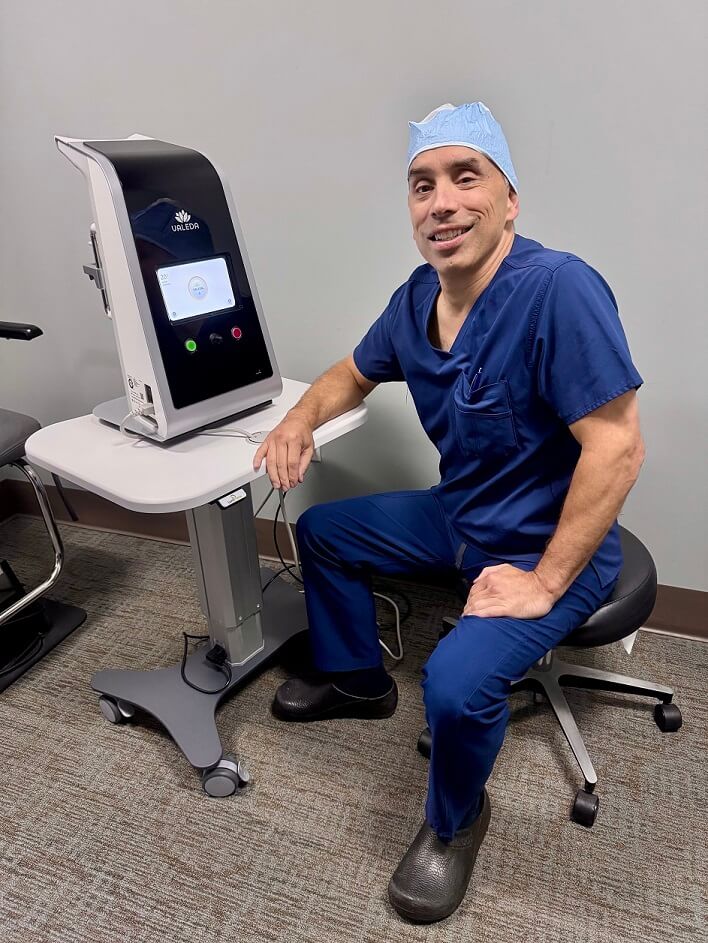
DSLT is a laser treatment that lowers eye pressure by improving drainage through the trabecular meshwork. It builds on selective laser trabeculoplasty (SLT), a well-established glaucoma procedure, with one major change. Traditional SLT requires the doctor to place a special contact lens on the eye to aim the laser. DSLT uses an automated, image-guided system that delivers laser energy through the edge of the cornea directly to the meshwork, so no lens ever touches your eye. For patients, that means a quicker, more comfortable visit with less time spent in the chair.
How DSLT Lowers Eye Pressure
The laser uses short, low-energy pulses that target pigmented cells in the trabecular meshwork while leaving surrounding tissue intact. This selective approach sets it apart from older, heat-based techniques like argon laser trabeculoplasty, which can cause more tissue damage.
Once treated, the meshwork responds with a natural healing process. As outflow improves, pressure drops.
These changes take time. Pressure typically starts to come down within a few weeks, with the full effect usually developing over about two to three months. Because laser trabeculoplasty doesn’t create incisions or leave behind an implant, it can often be repeated later if pressure begins to climb.
What to Expect During Treatment
DSLT is performed in the office and takes far less time than most people expect. Here is how a typical treatment unfolds.
- You sit or stand in front of the DSLT device while your eye doctor gently holds your eyelids open.
- The system’s camera automatically locates the trabecular meshwork.
- The laser delivers a series of pulses in a precise pattern, taking about 2.4 seconds per eye.
- You can return to your normal activities the same day.
Since nothing presses against the eye, most patients feel little to no discomfort.
Who Is a Good Candidate for DLST?
DSLT treats open-angle glaucoma and ocular hypertension. It works well for newly diagnosed patients who want to start with a laser rather than daily medication, as well as for those who struggle with drop side effects, cost, or keeping up with a dosing schedule.
Some patients use DSLT alongside other treatments, such as drops or a sustained-release implant like iDose TR, to reach their target pressure. When laser treatment alone doesn’t provide enough control, minimally invasive glaucoma surgery (MIGS) is often the next step.
Keep in mind that DSLT cannot restore vision glaucoma has already taken. Its purpose is to protect the sight you have now.
Keeping Up With Follow-Up Care
After treatment, your eye doctor will check your pressure over the following weeks to confirm the procedure is working. Mild redness, irritation, or a brief pressure spike can occur shortly after treatment. Some patients still need drops afterward, though often fewer than before. Glaucoma is a lifelong condition, so routine eye exams remain essential for tracking pressure and catching any changes early.
Wondering whether DSLT could help you manage your eye pressure with fewer drops? Schedule an appointment at Fichte, Endl & Elmer Eyecare in Buffalo, NY, or call us at 1-800-309-2020 today.